The Marketing Analytics Brain, Part 3: Paid and Organic Intelligence in One View
M.N. · 6 min read · 03/06/2026
Part 3 of 4 — Part 1: Getting the Data to Trust Itself · Part 2: Smarter Editorial Decisions with Data · Part 4: AI Search, Human Judgment, and What This Tool Is Actually For
This is the third in a four-part series describing a marketing analytics tool built to replace scattered dashboards with a single system designed around decisions. Part 1 covered the data foundation. Part 2 covered editorial prioritization, content opportunities, and A/B testing. This article covers paid and organic search as a single system.
Paid and Organic as a Single System
Paid search and organic search are usually managed by different people with different tools and different success metrics. The paid team does not have visibility into organic rankings. The SEO team does not have visibility into where paid budget is going. Neither conversation is as complete as it could be.
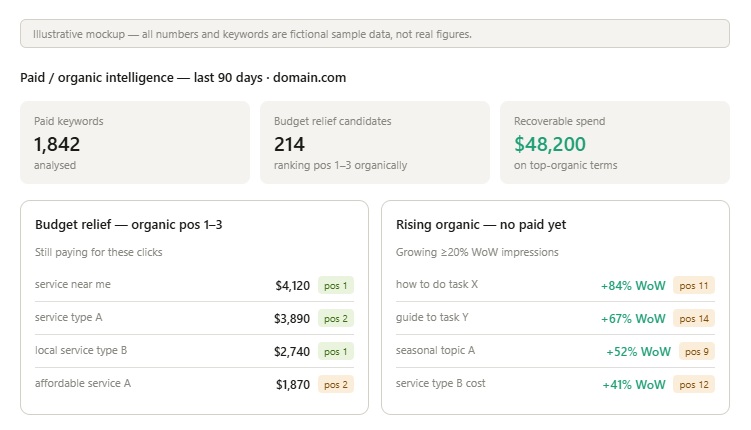
The most obvious gap this creates is paying for clicks on terms where organic already ranks in the top three positions. Paid ads on top-organic terms produce diminishing incremental traffic. Users who see both the organic listing and the paid ad tend to click the organic result. Identifying these keywords is a straightforward join between normalized paid keyword data and GSC position data.
On one account this analysis surfaced over $48,000 in spend over 90 days on keywords organic was already covering.
The other direction is more forward-looking. Organic impressions growing week-over-week on a keyword with no paid coverage is a signal worth acting on. Demand is building, the site has some relevance, and entering the paid auction before that trend peaks means cheaper cost-per-click and Quality Score accumulation before competitors notice. Once the surge peaks and CPCs spike, the window is gone.
The landing page layer connects the two sides. Pages that perform well organically, with high sessions and low bounce rates, are the same pages that will perform well as paid landing pages. They have been validated by real user behavior. Using them in paid campaigns instead of defaulting to the homepage is a straightforward improvement that rarely gets made because the two teams are not looking at the same data.
Part 4 covers the most forward-looking layer: measuring what AI assistants are actually doing with your content, how to attribute that activity to real business outcomes, and why a tool like this should always have a human in the loop.
Read Part 4: AI Search, Human Judgment, and What This Tool Is Actually For →